
10 cities with amazing deals for renters
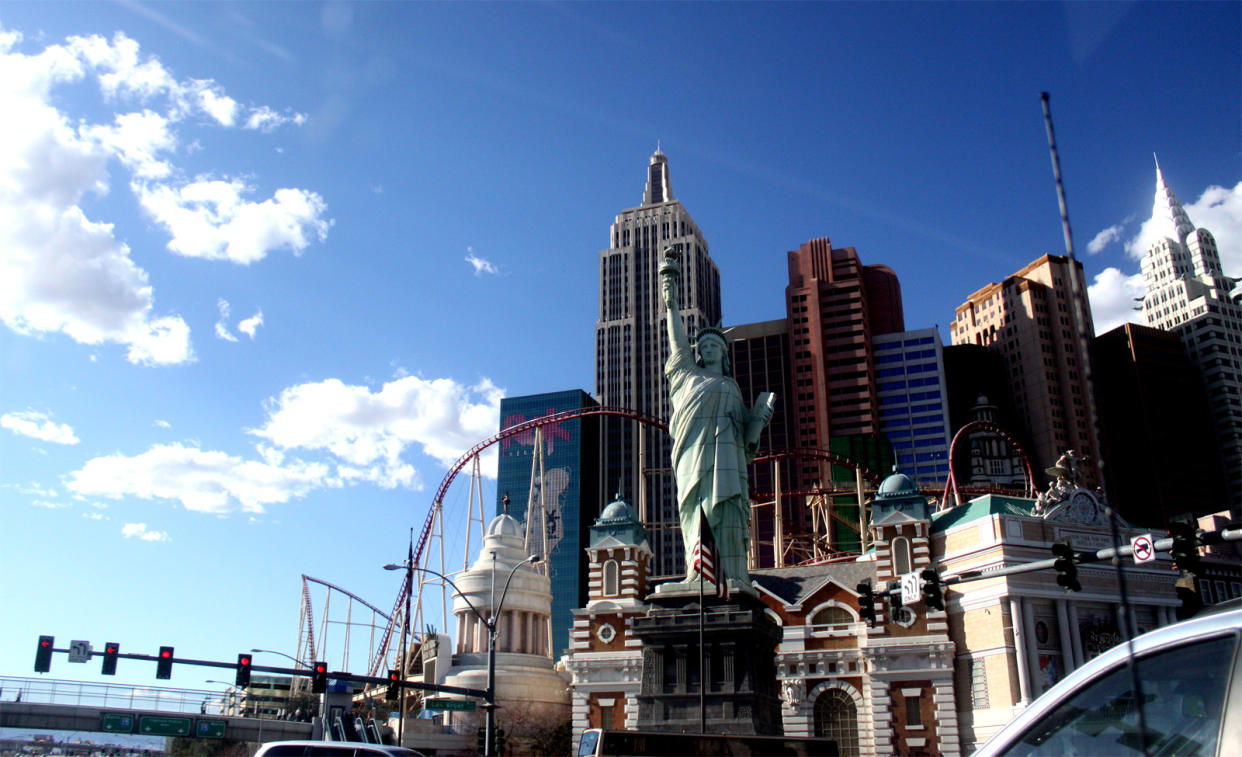
Love your landlord.
Though housing prices are down and rents are up, in some cities rents are still lower than they were just before the financial meltdown nearly five years ago.
The most amazing deals can be found in Las Vegas, Phoenix, Atlanta and even New York, according to Dallas-based MPF Research. And Zillow.com researchers say that in some cities, like San Francisco, San Diego and Boulder, Co. it is still cheaper to rent than buy.
In Las Vegas, rents are down nearly 16 percent from late 2007, with an average rent of $736 a month. In Phoenix, the drop is 7.2 percent with an average rent of $746 and in Atlanta, 4.4 percent off with rents averaging $816 a month. That translates to lots of bang for the buck.
“These are by and large attractive places to live,” said Greg Willett, vice president of Dallas-based MPF Research, but “the economy hasn’t recovered enough and there are not enough jobs to pull in renters.”
But there are perks. To appeal to the ubiquitous Gen Y renters, higher end units often come with a big flat screen television, kitchens outfitted with stainless steel or black appliances, and “social interaction spaces” wired for connectivity and a coffee bar.
Demand for apartments has swelled with the improving economy, but in New York City, the priciest market at $2992 a month (on average), rents are still three percent cheaper than they were five years ago. Chalk that bargain up to steep drops in rent during the 2008 and 2009 downturn, Willett said.
Overall, however, “the rental market is the strongest that it has been in three years,” according to Ronald Johnsey, president of Axiometrics, a Dallas-based firm that provides data on the apartment market. He said the best deals for renters are getting the “most space for the least amount of money” in a particular submarket.
Svenja Gudell, Zillow’s senior economist, said there “are always going to be places that are better to rent than buy because home prices are very high.”
Using the Zillow Rent Index, a price-to-rent ratio to calculate how many years of rent equal the price of the house, “the more expensive it is to buy, the better it is to rent.” But if home values continue to decrease and rents increase, “it could become better to buy at some point,” Gudell said. In San Francisco, for instance, the median price of a home was $456,200 in March, down 6 percent from the year; the median rent was $2378, up 6.9 percent from the previous year.
Perhaps surprisingly, the number of renters who decided to take advantage of low interest rates and low prices to buy a home hasn’t made a dent in the rental market, Willett said.
In the first quarter of this year, 95 percent of rental residences were occupied, a jump of more than 3 percentage points since the rental market bottomed out in late 2009. Prices on new leases are up eight percent.
Thirty percent of Americans rent the places they live, according to census data. While single family homes remain difficult to sell, in the last 12 to 18 months demand for rental apartments has spiked. It may continue. With few new apartment units under construction because developers couldn’t get financing and stopped building when the financial markets imploded, “rents will go up a little,” said Mark Obrinsky, chief economist of the National Multi Housing Council.
Though more single family homes are for rent than a few years ago – victims of foreclosure and the sluggish sales -- with more bedrooms they are more likely to appeal to large families than singles who make up the largest segment of renters. “If you are single, the multi-family apartment may seem like a better choice,” Obrinsky said. Apartments typically have fewer bedrooms.
Renters tend to be in their twenties, mobile, and haven’t had time to save for a downpayment on a home. Going forward, because of their large numbers, graying baby boomers are expected to swell the renters’ ranks.
As for the ages in between, those who typically left the rental world to buy their first home and start a family, are “hanging on longer to renting,” Obrinsky said. That has sparked demand for some larger floor plans with more bedrooms, though most rentals will continue to be studios, one and two bedroom units.
Read on for the 10 great American cities that have seen rents drop since 2007:
10. Orlando, FL
Average rent: $872
Prices down: 1%
Best known as a theme park heaven, Orlando’s famous attractions include the Walt Disney World Resort and the Universal Orlando Resort, SeaWorld and Gatorland. The tourism industry reigns but the Orlando also hops as a conference and convention destination.
9. Greensboro/Winston-Salem, NC
Average rent: $669
Prices down: 2%
Winston-Salem, credited with the nation’s second best downtown by Livability.com, has a historic district, an arts district, dozens of new restaurants, bars, galleries and residential developments and boasts a young population. Greensboro has expanded into the metropolitan area known as the Triad which also includes Winston-Salem and High Point.
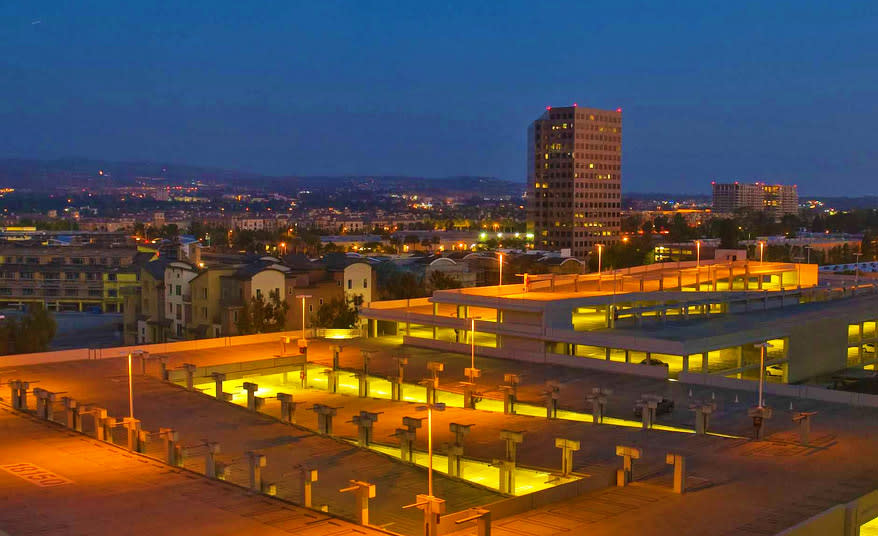
8. Santa Ana/Anaheim/Irvine, CA
Average rent: $1550
Prices down: 2%
With more than 3 million residents, Orange County is mostly suburban, though there are several edge city-style business, shopping and entertainment hubs including Irvine Business Center, Newport Center and South Coast Metro. Irvine is the major business and financial hub and Anaheim is home to the original Magic Kingdom, Disneyland.
7. New York City, NY
Average rent: $2992
Prices down: 3%
No matter that apartments are closet-sized compared to other cities, this is the city that never sleeps. If you can afford rent here, you can probably afford it anywhere.
6. Los Angeles, CA
Average rent: $1600
Prices down: 3.6%
From the sandy beaches of Malibu to lure of Hollywood, Los Angeles throbs with style, art and great architecture, even with the busy freeways.
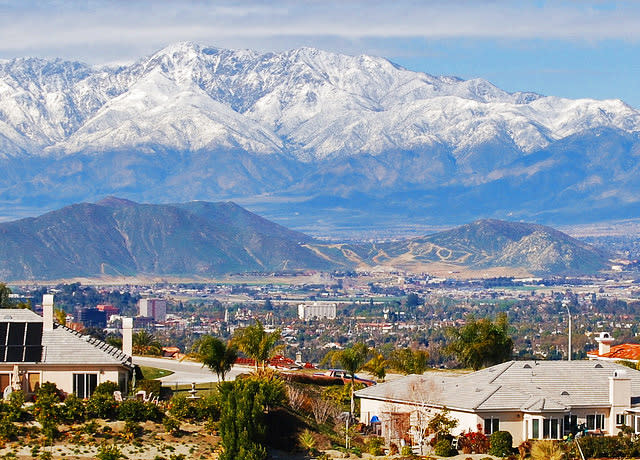
5. Riverside, CA
Average rent: $1070
Prices down: 3.9%
Asked about quality of life in a survey last year, Riverside residents boasted about a climate that allows for enjoying the outdoors year-round and a convenient location in the heart of Southern California, close to Los Angeles, Orange County and San Diego but also to mountains, deserts and beaches.
4. Atlanta, GA
Average rent: $816
Prices down: 4.4%
With MARTA, Atlanta’s $2 a ride bus and rail system, you can visit the Federal Reserve Bank Money Museum, Centenniel Olympic Park, the apartment where Margaret Mitchell wrote “Gone With The Wind” or the Martin Luther King, Jr., historic district. Or shop til you drop at the malls in Buckhead.
3. Jacksonville, FL
Average rent: $776
Prices down: 4.7%
With more than 500 neighborhoods from downtown to Neptune Beach, Jacksonville, Florida has the largest urban park system in the United States with 337 locations on more than 80,000 acres and waterfront access to the St. Johns River and the Atlantic Ocean for boating, swimming, sailing, jet skis, surfing and water-skiing.
2. Phoenix, AZ
Average rent: $746
Prices down: 7.2%
In Phoenix, the Sonoran desert metropolis, sunshine, cactus and cowboys abound. The rugged mountains are awe-inspiring, a backdrop for a sophisticated urban tapestry that includes resort-style living and golf courses playable 12 months a year.
1. Las Vegas, NV
Average rent: $736
Prices down: 15.9%
In Las Vegas, a plethora of resort-style apartments are as indulgent and amenity-laden as the city known for entertainment at your fingertips, casinos, fine dining and great shopping.
